oceana sundjaja
Thesis: Through imagery of similes, alliterations and metaphors, Oscar Wilde presents the duplicity in Dorian Gray’s character where behind the glossy visage of youth and beauty he is internally hideous because of hi moral depravity and corruption.
Visual Representation Explained
This illusion is often used as a metaphor to explore the concept of duality or duplicity in literature and art.
The “young girl old woman” illusion, also known as the “vase-face” illusion, is a perceptual phenomenon where a single image can be interpreted in two different ways: either as the profile of a young girl facing away or as the curves of an old woman in profile
Dorian Gray VS ‘young girl old woman’ illusion
- DUPLICITY
In Chapter 14 of “The Picture of Dorian Gray” by Oscar Wilde, the theme of duplicity is prominent. This chapter focuses on Dorian Gray’s increasing moral decay and his realization of the true nature of his portrait. Throughout the chapter, Dorian appears outwardly youthful and innocent when he has committed a murder.
“He looked like a boy who had been tired out with play,” (Wilde 136). In the morning, Dorian is sleeping like a baby when the servant comes in to wake him. He wakes pleasantly, smiling as if from a lovely dream. But soon, the night’s bloody events come back to him. Dorian sickens and feels again the loathing for Basil that had caused him to strike. Wilde here uses the simile “like a boy who had been tired out with play” to show how in the forgetfulness and innocence of sleep, Dorian’s face takes on a childlike appearance – giving the reader a sense of contrast with how old and tortured his internal life has become.
“As though he had been lost in some delightful dream.” (Wilde 136). Alliteration and metaphor is used to portray Dorian living in his own little fantastical world and his dream depicts his pleasure despite committing a murder of one of his best friends – a reality being so hideous and horrible. However, the effects of his crime still linger, it just simply has not struck him yet. Moreover, Dorian has lost his direction and himself in a “delightful dream” after his immoral actions and is escaping his own reality. Like a young boy, Dorian drowns out the consequences of his actions in a dream-like state of consciousness and does not want to face reality. It echoes our behavior as children, when we refuse to acknowledge or admit our capacity for committing terrible deeds.
In the meantime, Dorian recognizes that he is caught up in some kind of nightmare, since he has no one to seek help from to get rid of the body before someone else figures it out. As he recognizes that he is in trouble if no one is willing to clean up his mess, that is Basil’s body, he is still trying to convince himself that his corrupt and immoral actions are protected by his youth. Furthermore, Dorian believes that youth protects him from guilt, consequences and repercussions of doing wrong, and this creates a stark contrast with his moral decay and depravity having killed a friend which underlines duplicity.
The ‘young girl old woman’ illusion connects to the theme of duplicity in the novel by highlighting the contrast between Dorian’s external appearance and his internal reality. Just as the illusion presents two different interpretations of a single image, an old woman and a young lady. Dorian presents two different personas to the world: the youthful and charming young man, symbolized by the young lady in the illusion. On the other hand, the morally corrupt and aging soul hidden beneath is the curves of the old evil looking lady.
The portrait of Dorian Gray serves as a physical representation of this duplicity. While Dorian’s external appearance remains youthful and untouched by his immoral actions, the portrait ages and bears the marks of his sins. The contrast between the eternal youth of Dorian’s appearance and the decaying portrait underscores the theme of duplicity.
By employing the young girl old woman illusion, Wilde draws attention to the deceptive nature of appearances and the hidden depths of a person’s character. It serves as a visual representation for the duplicity, emphasizing the idea that true beauty and ugliness lie not in physical appearances but in the choices and actions of individuals, just as how we choose to look at the illusion of the young and old woman. The same Dorian which is in two different states –asleep and awake presents two different sides of Dorian. The Dorian who is asleep is peaceful and calm, while the awakened Dorian is stressed and afraid of his consequences. Yet, this is a connection between Dorian Gray and the illusion with one same portrait but two different persons in two age groups, young and old.
- SELF DECEPTION
Dorian Gray confronts the true nature of his portrait and the corruption it hides in this chapter. Throughout the novel, Dorian has deceived himself by maintaining a facade of youth and innocence while engaging in immoral actions and indulging in a hedonistic lifestyle. He has been able to hide the consequences of his actions from himself and maintain the illusion of a virtuous existence. In the evidence, “It was a thing to be driven out of the mind, to be drugged with poppies, to be strangled lest it might strangle one itself.” (Wilde 137). Dorian’s descent into drug use through opioid abuse is indicative of a deteriorating constitution as well as the corruption and corrosion of his moral judgement. Wilde emphasizes the idea that youth’s beauty and frivolity are fleeting and cannot be depended on for one’s mental stability. Dorian wants to delete the memory of his crime from his consciousness. Through a preemptive strategy as seen in the phrase “to be strangled lest it might strangle one itself”, Dorian protects his sanity by concealing his unutterable crime which he cannot articulate properly except by calling it a “thing”.
In the quotation “But the thing that had been sitting at the table was gone.” (Wilde 147), the ‘thing’ in both lines refers to Basil’s body. Obviously, Dorian does not want to entertain the idea of having killed someone and acknowledge that what he has done is immoral. Simultaneously, he is savage since he does not pay any respect to human life so much so that he would objectify the body of his dear friend, Basil, to a “thing”. This objectification of Basil and his body highlights Dorian’s morally corrupt approach to relationships. This “use and discard” approach of dealing with people becomes a focal point of his life from which mistakes are made and further concealment is required. Nevertheless, his external appearance is still respectable and genteel so that Dorian Grey is not just deceiving others, he may as well be deceiving himself.
The “young girl old woman” illusion represents the dual nature of Dorian’s self-deception. Just as the illusion presents two different interpretations of a single image, Dorian has constructed two different versions of himself: the youthful and charming facade he presents to the world, and the morally degraded individual hidden beneath. Dorian’s self-deception is further reinforced by the portrait itself, which is strangling him so much. The portrait serves as a physical manifestation of his hidden sins and deteriorating soul. This juxtaposition highlights the discrepancy between Dorian’s self-perception and the reality of his actions.
The “young girl old woman” illusion thus connects to the theme of self-deception by emphasizing the contrast between Dorian’s external appearance and his internal corruption. It serves as a reminder that one can deceive themselves, just as Dorian has, by projecting an image of innocence and denying the darker aspects of their character. The ‘thing’ in the evidence above is having killed someone, but instead of reflecting on himself and thinking that it is a moral issue, Dorian Gray decided to define it as a ‘thing’ or even a piece of art just like what he thought about the death of Sybil. Ultimately, the illusion of the ‘thing’ serves as a cautionary symbol, illustrating the consequences of self-deception and the destructive nature of living a life of duplicity. At the same time, Dorian doesn’t realize the seriousness or even will never believe the seriousness of his murder, despite being so worried about his aftermath. However, reality is what it is. Undeniably, Dorian still prefers to live in his own bubble of hedonism, narcissism and self deception, than to face and accept the reality of his immoral actions.
Contemporary connections VS Dorian Gray
Hypocrisy in politicians and public figures and self-deception in public institutions
Political hypocrisy arises when politicians publicly advocate for beliefs or policies that contradict their actions, eroding trust in leaders and institutions. Examples include condemning actions they engage in or failing to fulfill public expectations. To address this issue, accountability, transparency, and ethical conduct in public office must be prioritized. By doing so, trust in leaders can be restored, fostering genuine leadership and public confidence in the political system.
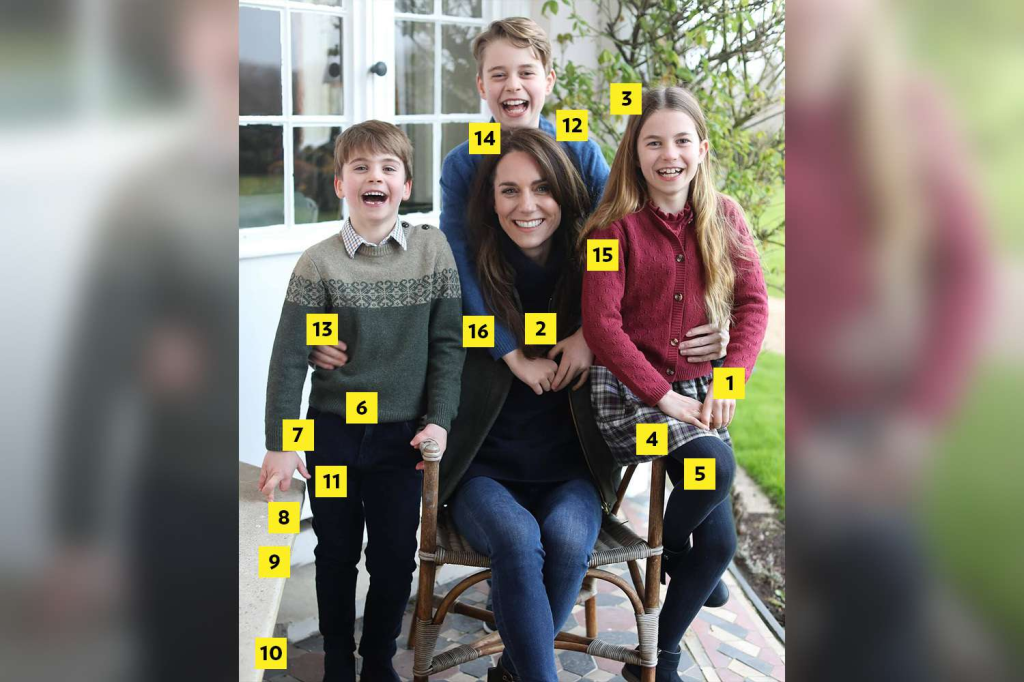
Dorian Gray presents himself as a morally upright and respectable member of society, while indulging in secret vices and leading a double life. This mirrors the behavior of politicians who often project an image of virtue and integrity while engaging in unethical or hypocritical actions behind the scenes. Just as how politicians nowadays hide their true intentions and engage in hypocritical behavior, Dorian Gray hides his true nature behind a facade of righteousness. Both instances highlight the dangers of hypocrisy and the potential consequences of deceiving oneself and others. Such institutions, including the Royal Family, project an idealized image to the public through social media and Photoshop to escape their own imperfections.
A contemporary example is Kate Middleton who has been one of the most popular and high-profile royals for nearly 15 years. So it is strange that she suddenly retreated from the public eye for three months, especially since she had appeared healthy without giving much details on her condition. Imagine if the Trump administration had said Ivanka was being hospitalized for two weeks, would not describe her illness, then offered no photos or health updates for three months. We would have questioned the truth about the politics secrets behind. It is ironic how people in our society are constantly looking for institutions that project a perfect image, since they desire to see something perfect which contrasts their perfect life. And this is exactly why people buy magazines, watch reality shows and worship pop icons, being attracted to perceived perfection in contrast to their own imperfections.
Furthermore, Dorian Gray’s belief that he is doing the correct thing is reinforced when he is surrounded by people who encourage his hedonistic desires. His social circle and reputation can make him feel righteous and vain, leading him to engage in self-deception which proliferates further to more deception . Ultimately, it boosts his self-worth, creating a cycle of indulgence and moral decay. While, in today’s political landscape, politicians often resort to fabricating lies or engaging in foolish actions in an attempt to cover up their mistakes. This behavior mirrors the recent incident involving the British royal family, who posted a photoshopped picture of Kate appearing peaceful with her children, deceiving the public. When the public discovered the falseness of the image, the royal family then shared a clip of Kate walking in public, only to realize later that the clip was from one year ago. This example highlights the prevalent hypocrisy among politicians, perpetuating a never-ending loop of misguided actions. This is so similar to Dorian Gray in chapter 14 when he first lied to Alan that, “It was suicide, Alan.” (Wilde 142). Afterward, when Alan refuses to assist him, Dorian finally confesses, saying, “Alan, it was murder. I killed him. You don’t know what he had made me suffer.” It is noteworthy that Dorian only confesses when his best friend refuses to clean up Basil’s body, indicating that it takes an extreme situation for him to admit the truth. Furthermore, he astonishingly claims to have suffered when he is the one responsible for Basil’s murder. This sheds light on the similarity between Dorian Gray and contemporary politicians who frequently fabricate lies to cover previous falsehoods. Since they only want people to see the perfect side of things, they only choose to admit to their actions when pushed to the absolute limit, reflecting hypocrisy.
A prime example of the non stop cycle of hedonism and selfishness is also portrayed when Dorian Gray kills Basil and then he threatens his best friend Alan Campbell to clean Basil’s body for him. The thematic connection allows us to reflect on the broader implications of deception and the destructive nature of leading a life filled with hypocrisy, as exemplified by Dorian Gray’s character.
- edited picture of Kate Middleton and her children (credit)
 YEAR 10 HANGZHOU ENGLISH
Leave a comment