Miya Ruijs
Thesis:
In “The Picture of Dorian Gray” Oscar Wilde uses eccentric cultural and historical allusions, in combination with Gothic symbolism, to expose the dire repercussions of vanity, obsession, and the unyielding pursuit of pleasure.
Tannhäuser
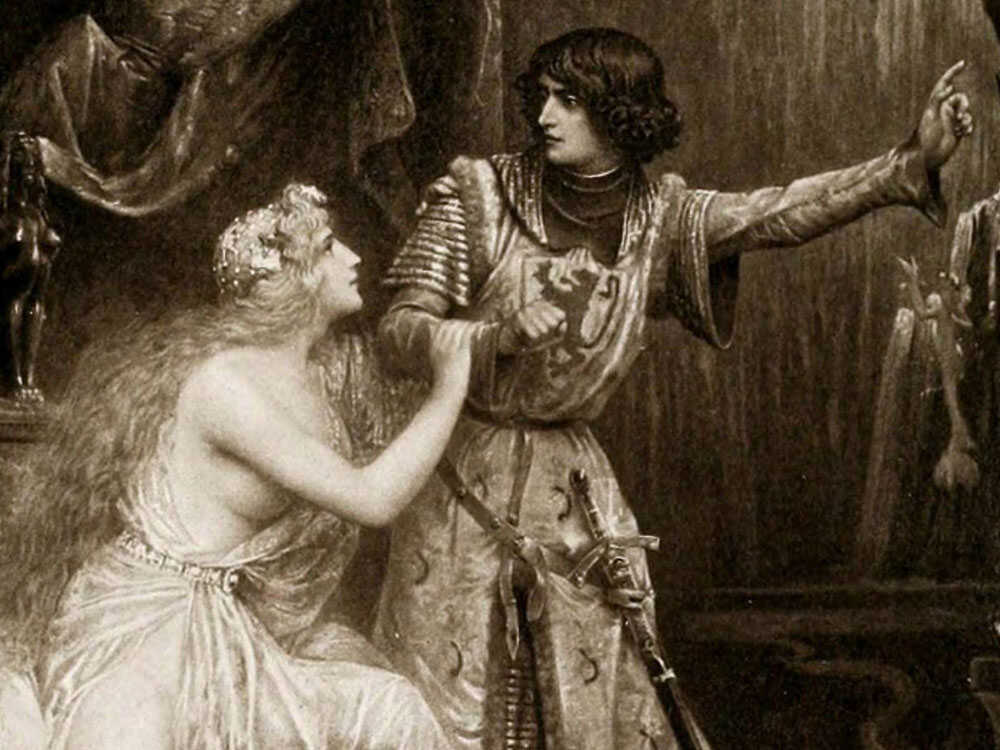
Oscar Wilde utilizes eccentric cultural and historical allusions, along with Gothic symbolism, in Chapter 11 of “The Picture of Dorian Gray” to explore the dire consequences that arise from indulging in constant pleasure.
In Chapter 11 of Oscar Wilde’s novel “The Picture of Dorian Gray,” the narrator describes Dorian Gray’s state of mind as he listens to Richard Wagner’s opera “Tannhäuser.” Quote: “listening in rapt pleasure to “Tannhauser” and seeing in the prelude to that great work of art a presentation of the tragedy of his own soul.” Here the narrator is explaining that Dorian is captivated by the music, experiencing intense pleasure.
“Tannhäuser” is an opera composed by Richard Wagner, and it tells the story of a knight and minstrel named Tannhäuser who struggles between the sacred and profane, between spiritual redemption and indulgence in sensual pleasure. Tannhäuser becomes enchanted by Venus and decides to live in her magical realm of pleasure and sensuality. However, he eventually grows weary of this life and longs to return to the real world. He seeks forgiveness from the Pope, who refuses to forgive him due to the gravity of his sins. Tannhäuser is given a chance for redemption, but is ultimately unable to recover, leading to his tragic demise.
The allusion to “Tannhäuser” allows Wilde to emphasize the destructive nature of unbridled hedonism and the relentless pursuit of pleasure. Like Tannhäuser, Dorian finds himself trapped in a perpetual cycle of indulgence, desperately seeking redemption but ultimately failing to attain it. Through this allusion, Wilde underscores the theme of moral decay and exposes the tragic outcomes that arise from a life of extreme pleasure and vanity.
Gothic symbolism is identified with two obsessions: an interest in otherness and the unfamiliar, and a strong inclination to delve into socially unconventional desires and cross boundaries. By alluding to and referencing the opera, Wilde introduces an additional layer of darkness and foreboding to the narrative. The allusion foreshadows the impending doom that awaits Dorian, intensifying the sense of impending tragedy and reinforcing the notion that the pursuit of pleasure and vanity inevitably leads to ruin.
Modern Connection [volume warning for the end of the snippet]
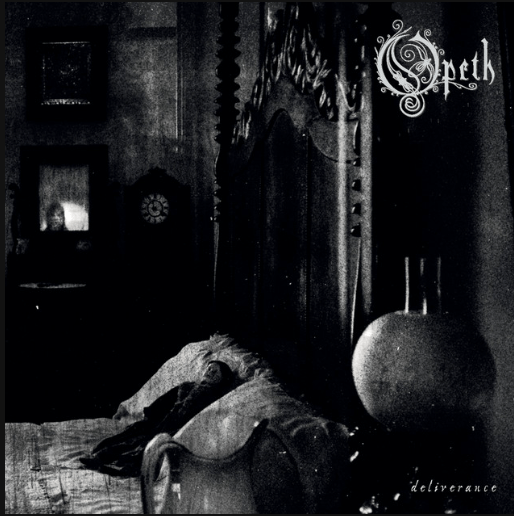
Opeth’s 2002 song “Deliverance” establishes a profound connection with the thematic exploration of Dorian’s destructive tendencies in Wilde’s “The Picture of Dorian Gray.” The song, like Richard Wagner’s opera “Tannhäuser,” delves into the struggle between sacred and profane desires, the consequences of indulgence, and the elusive pursuit of redemption.
An example of this would be the lyrics from the second, “Floating on mist, Crept up the caverns of my brain, Received no warning, From nothing to a life code” The imagery of floating on mist and the creeping presence in the caverns of the brain mirror the brooding atmosphere of “The Picture of Dorian Gray.” The lyrics suggest a sudden transformation, a shift from nothingness to a complex existence, which resonates with Dorian’s journey from innocence to corruption in the novel, capturing the moral decay resulting from Dorian’s unwavering commitment to pleasure and vanity. Deliverance serves as a modern embodiment of the destructive allure of hedonism, aligning perfectly with the exploration of Dorian’s thoughts and the tragic consequences that befall him.
——————————————————————————————————————————————————————
Anne de Joyeuse
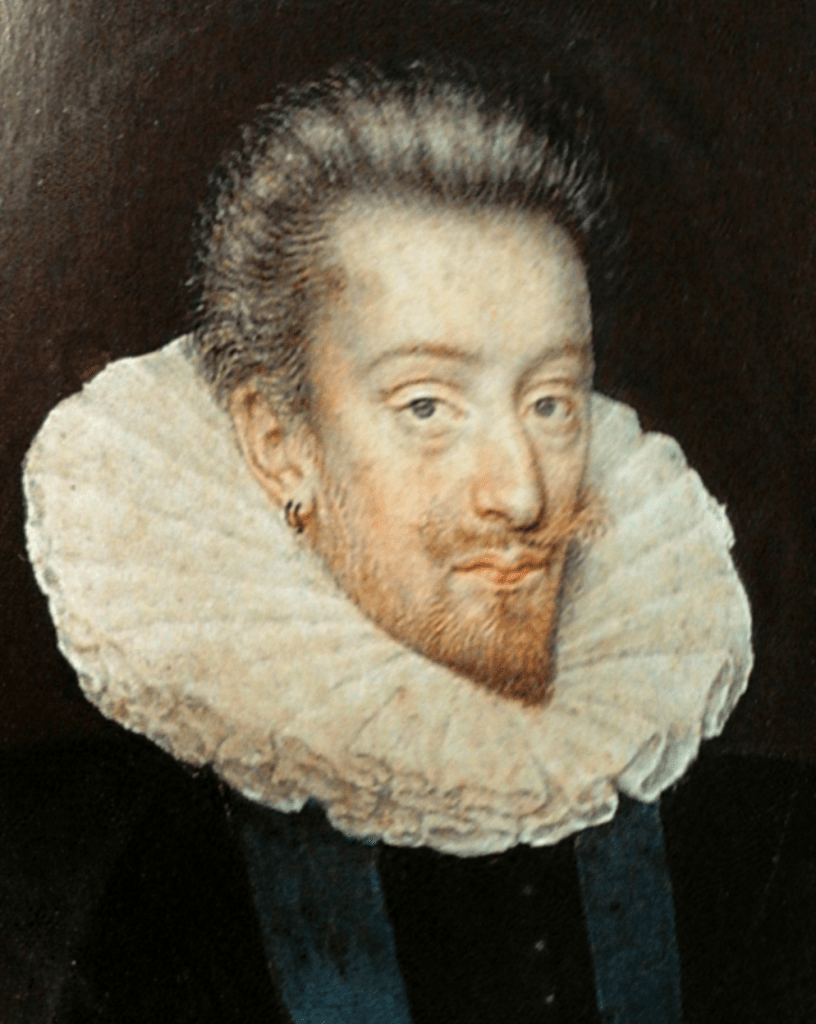
In “The Picture of Dorian Gray,” Oscar Wilde uses eccentric cultural and historical allusions, combined with Gothic symbolism, to dive into the dire consequences of vanity.
In chapter 11 of “The Picture of Dorian Gray,” the narrator says, “On one occasion, he took up the study of jewels, and appeared at a costume ball as Anne de Joyeuse, Admiral of France.” Here, the narrator is explaining how Dorian makes a deliberate choice to dress up as Anne de Joyeuse. Here, Oscar Wilde is employing eccentric cultural and historical allusions to dive into the dire consequences of vanity.
The historical context surrounding Anne de Joyeuse’s scandalous relationship with Henri III adds another layer of Gothic symbolism to Dorian’s choice of disguise. Their passionate and forbidden romance reflects the gothic themes of secrecy, blurred boundaries between reality and illusion. By assuming the identity of Anne de Joyeuse, Dorian aligns himself with these profound Gothic motifs, effectively highlighting the danger that will arise from his vanity and pursuit of superficial pleasures. Dorian seeks to align himself with the qualities and reputation associated with Anne de Joyeuse. This choice reveals his preoccupation with presenting himself as aesthetically pleasing and captivating to others.
The scene is set in an extravagant environment, where artificial identities are celebrated, Dorian becomes consumed by his hedonistic obsession with appearances. The eccentric costumes, masks, and emphasis on superficiality all contribute to their relentless pursuit of image and the seductive allure of a pleasure-seeking lifestyle. The meticulously crafted Gothic backdrop heightens the sense of danger and moral decay that accompany Dorian’s refusal to confront his true self.
Through the use cultural and historical references and Gothic symbolism, Wilde exposes the dangers of vanity. Dorian’s choice to dress up as Anne de Joyeuse serves as a part of his larger journey, wherein his relentless pursuit of pleasure and avoidance of his true self lead to disastrous consequences. The extravagant costume ball scene, with its emphasis on appearance and artificiality, serves as a vivid representation of these consequences.
Modern Connection [volume warning]
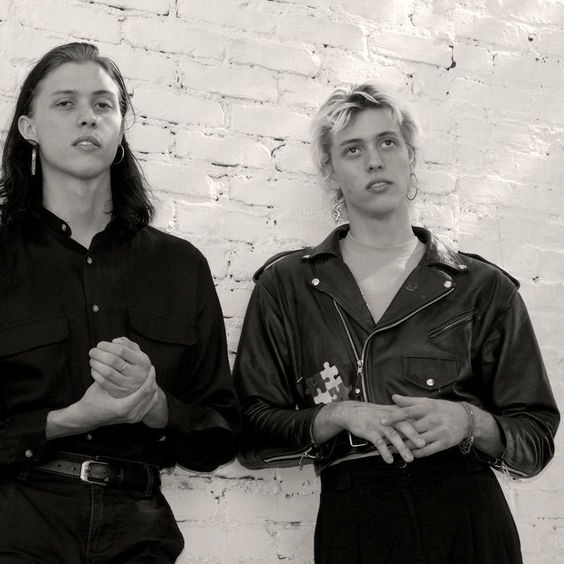
The 2020 song “Make Yer Mark” by The Garden, is a modern representation of vanity in “The Picture of Dorian Gray” by Oscar Wilde. Just as Wilde employs eccentric cultural and historical allusions to explore the dire consequences of vanity, The Garden’s lyrics delve into the internal struggles and destructive repercussions of this theme.
The lyric “You’re under the impression that you’ve got no flaws like a red rose flower” captures the delusion and self-deception that can be observed in individuals who believe they are flawless and refuse to acknowledge their imperfections. In today’s world, there is often a strong emphasis on appearances and the pursuit of superficial perfection. “Make Yer Mark” serves as a modern representation of the analysis of vanity, illustrating the challenges and destructive repercussions that arise from an obsession with appearances and the avoidance of inner truths. It serves as a kind of reminder for individuals to prioritize self-reflection, authenticity, and genuine connections over the pursuit of superficial perfection in today’s society.
——————————————————————————————————————————————————————
Bernal Diaz and The Temple of Destiny
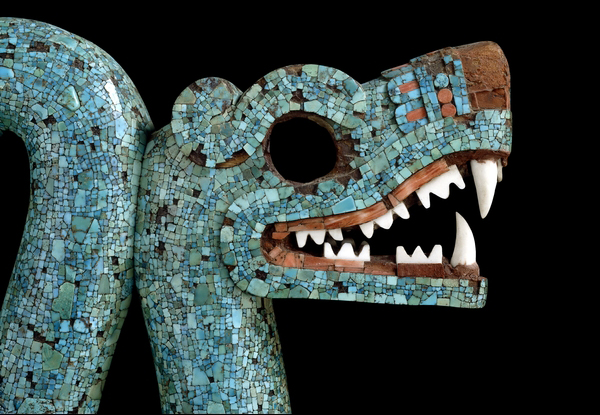
In “The Picture of Dorian Gray”, Oscar Wilde utilizes eccentric cultural and historical allusions, along with Gothic symbolism, to reveal the profound consequences of obsession.
One such allusion is the mention of a “huge cylindrical drum, covered with the skins of great serpents, like the one that Bernal Diaz saw when he went with Cortes into the Mexican temple.” This allusion refers to Bernal Diaz del Castillo, a Spanish conquistador who accompanied Hernán Cortés [de Monroy y Pizarro Altamirano] in the conquest of the Aztec Empire. Diaz’s eyewitness account described the Aztec temples, including frightening images such as serpent skin drums. The reference to Diaz’s account depicts the serpent skin drums and aspects of Aztec culture as terrifying and monstrous, reflecting the colonial perspective that often portrayed Indigenous religious practices as primitive or monstrous.
This allusion highlights the prevalent theme of cultural exoticism during the Victorian era, wherein non-Western cultures were typically depicted as mysterious and menacing. By drawing upon the imagery of Aztec religious practices, Wilde taps into the Gothic Orientalist tropes of the time, portraying Aztec civilization and other Mesoamerican cultures as enigmatic empires grounded in blood sacrifice and foreboding rituals.
The serpent itself carries strong symbolic significance. In the Judeo-Christian tradition, the serpent entices Eve to partake of the forbidden fruit, leading to humanity’s fall. By incorporating the image of serpent skins on the drum, Wilde evokes a sense of danger and allure. The drum becomes a metaphorical instrument that beats with the seductive rhythms of desire, drawing Dorian deeper into his obsessive pursuit of pleasure and eternal youth. [This type of beat can be heard in my modern connection aswell :)]
Just as the serpent sheds its skin, Dorian Gray sheds his moral integrity and descends into a depraved existence. The drums symbolize the allure of hedonism and the dark forces that consume Dorian’s soul, ultimately resulting in his moral decay and self-destruction. Through the allusion to Diaz’s account of the serpent skin drums, which serve as an unfamiliar and ominous religious artifact, Wilde intensifies the atmosphere of intrigue and danger surrounding Dorian Gray’s descent into obsession.
Modern Connection [volume warning]
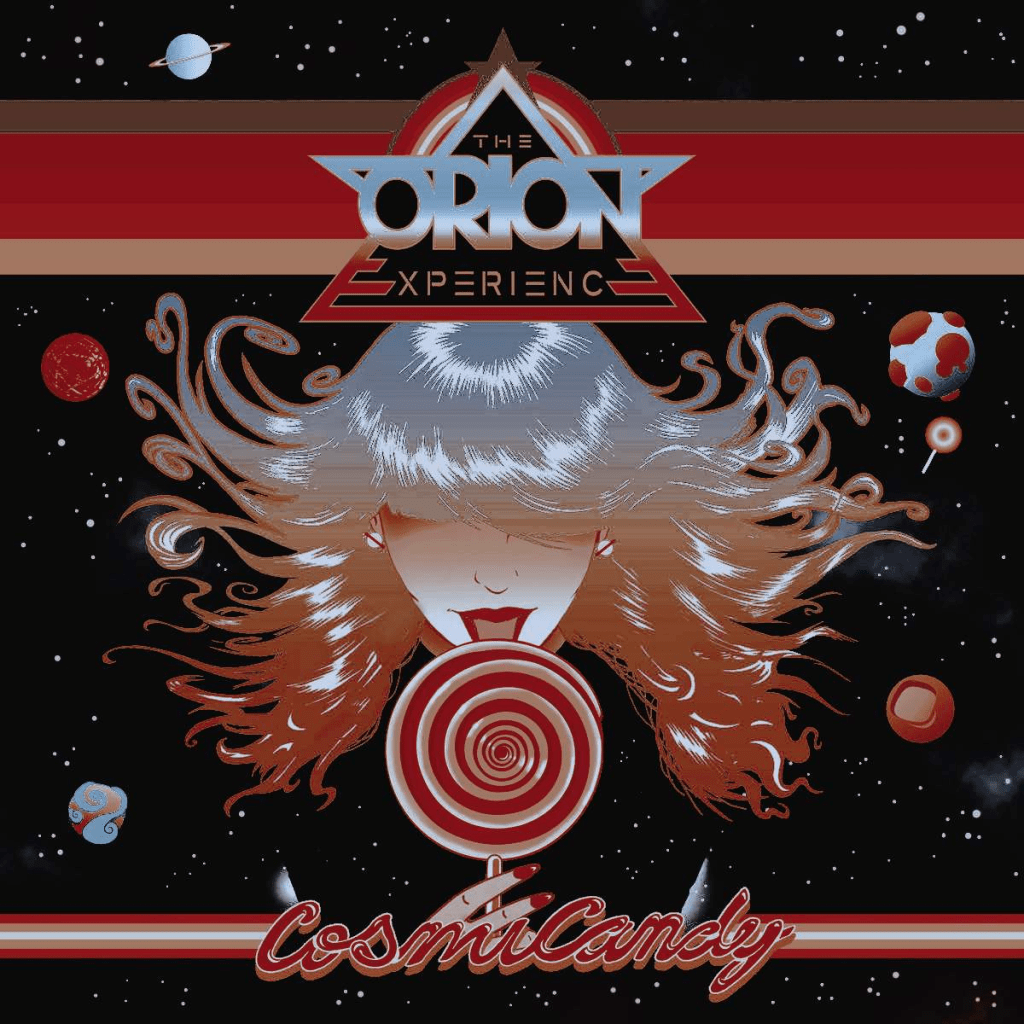
The 2006 song “Cult of Dionysus” by The Orion Experience serves as a modern representation of the obsession found in “The Picture of Dorian Gray”. The song portrays a vivid depiction of being consumed by a cult-like obsession, drawing parallels to the intense fixation experienced by Dorian Gray in Oscar Wilde’s novel.
The mention of “The Cult of Dionysus” itself alludes to the Greek god of wine, revelry, and excess, symbolizing the pursuit of hedonistic desires. This aligns with Dorian Gray’s own pursuit of pleasure and eternal youth, as he becomes entangled in a web of destructive desires.“Cult of Dionysus” mirrors the themes of intense obsession and the consequences it brings forth, evoking a sense of allure and danger that mirrors the journey of Dorian Gray in Wilde’s novel.
Visual Representation
In my visual representation, I decided to create three distinct panels, each showcasing different objects that stand out. I chose to highlight pearls and mirrors as key elements within these panels. To enhance their prominence, I surrounded them with a dark and shadowy setting, ensuring that the focus remains solely on these objects. By featuring pearls and mirrors, I wanted to symbolize the allure of beauty and material possessions that captivate the characters in the story. Pearls, often associated with wealth and elegance, represent the external beauty that Dorian Gray becomes obsessed with maintaining. Mirrors, on the other hand, serve as a metaphor for introspection and self-reflection, reflecting the distorted image of Dorian’s corrupted soul.
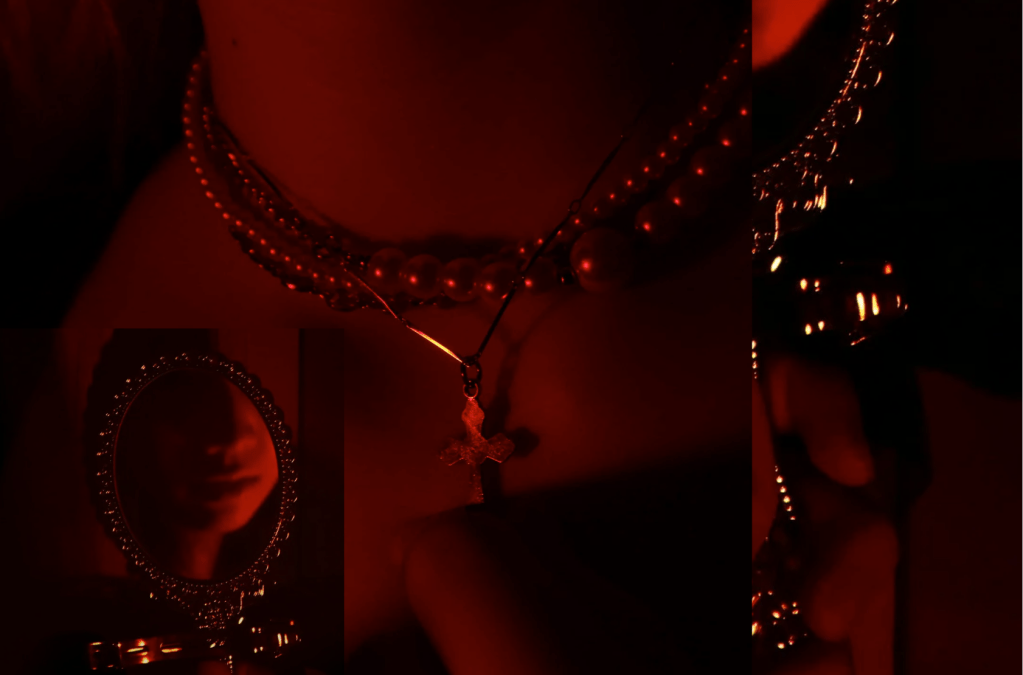
Model Credit –> Carly Zhang
 YEAR 10 HANGZHOU ENGLISH